Content
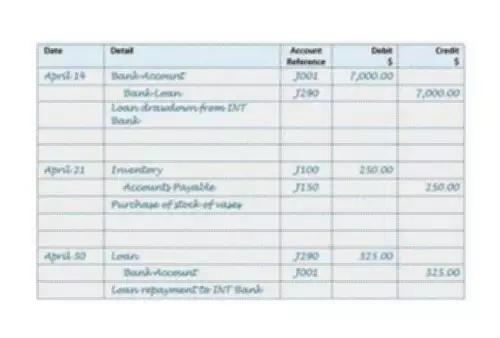
Secondly, the ratio enables companies to determine if their credit policies and processes support good cash flow and continued business growth — or not. Debits decrease asset and expense accounts and increase liability, equity, and revenue accounts. Increases in all balance sheet accounts are recorded with debits. Decreases in liabilities and revenues are recorded with credits. Increases in both revenues and expenses are recorded with credits. Providing multiple ways for your customers to pay their invoices, will make it easier for them to match what their own financial process. Making your customer’s lives easier will help you get paid faster.
A poorly managed company allows customers to exceed the agreed-upon payment schedule. It had $1,183,363 in receivables in 2020, and in 2019, it reported receivables of $1,178,423. Furthermore, a high turnover doesn’t have to be a good thing. Your customers are first-rate and pay their an increase in a companys receivables turnover ratio typically means the company is: invoices on time, which improves your cash flow so that you can support your day-to-day operations. AR turnover ratio is also not especially helpful to businesses with a high degree of seasonality. In these cases, it’s more helpful to pay attention to accounts receivable aging.
If you calculate it quarterly, compare the past few quarters. If your company is too conservative with its credit management, you may lose customers to competitors or experience a quick drop in sales during a slow economic period. On the other hand, a low ratio may imply that your company has poor management, gives credit too easily, has a riskier customer base or spends too much on operating expenses.
The bad-debt method that uses the accounts receivable aging report is the percentage-of-receivables method. Which ratio indicates the effectiveness of a company’s credit extension policy? Using online payment platforms like Square or Paypal allows businesses to remove the need for collections calls and potential losses due to non-payments. While their might be upfront commission costs for these portals, it is important to consider the money and time that will be saved in the long run. Computing a business’s receivable turnover ratio is pretty straightforward once you have the required data. The simplest way to calculate average accounts receivable would be to sum the beginning and ending accounts receivable balances and divide by two. The Smith Company has a beginning accounts receivable of $250,000 and an ending accounts receivable of $315,000.
In the fiscal year ended December 31, 2017, there were $100,000 gross credit sales and returns of $10,000. High accounts receivable turnover ratios are more favorable than low ratios because this signifies a company is converting accounts receivables to cash faster.
To truly transform your finance and accounting processes, you need the guidance of a trusted partner. Our proven approach has helped thousands of customers identify and address bottlenecks to free up capacity, strengthen controls, and deliver measurable results.
To stay on top of unpaid bills, you should review your accounts payable aging report often and submit your payments on time. When analyzing the balance sheet, investors can calculate how quickly customers are paying their credit bills, and this can offer insight into the health of the organization. We say that “the company turns over its receivables 10 times during the year.” In other words, on average the company collects its outstanding receivables 10 times per year. Receivable Turnover Ratio or Debtor’s Turnover Ratio is an accounting measure used to measure how effective a company is in extending credit as well as collecting debts. The asset turnover metric is useful for evaluating the efficiency with which management is employing a company’s assets to generate sales. A higher asset turnover rate implies that a company is being run in an efficient manner.
Effective legal cost management now and into the future.
Posted: Mon, 05 Dec 2022 14:53:35 GMT [source]
Companies are always keen to find out about their customers’ credit rating in order to establish whether they are going to pay their debt and how quickly they https://simple-accounting.org/ do so. When a company does not pay attention to this factor, it ends up issuing credit to bad customers who delay payment or completely foregoing payment.


Leave Comment